In the early 2000s, Comuna 13 was the most dangerous neighborhood in one of the most dangerous cities on earth. Today, it's Colombia's most visited cultural destination — a place where half a million tourists a year come to see what happens when a community refuses to be defined by its worst years.
This isn't a feel-good story about paint covering over pain. It's a complicated, ongoing story about art as a political act, tourism as a double-edged sword, and a neighborhood that rebuilt itself from the inside out while the rest of the world watched.
A Neighborhood Caught in the Crossfire
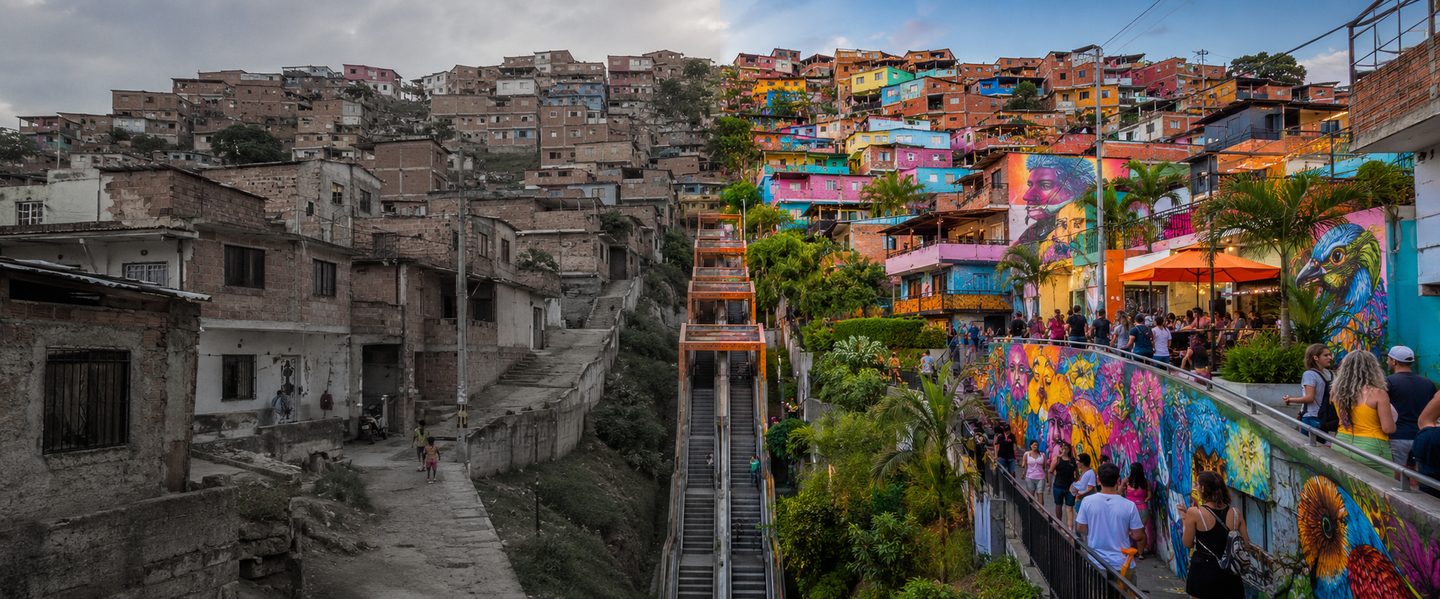
Comuna 13 sits on the steep western hillsides of Medellín's Aburrá Valley. By the 1990s, it had become a contested battleground. FARC and ELN guerrilla forces used its narrow, winding streets as a strategic corridor to move fighters and supplies into the city. Right-wing paramilitary groups moved in to push them out. Caught between them were tens of thousands of civilians who had no part in the conflict and nowhere to go.
Residents lived under informal curfews, navigated invisible territorial lines, and raised children in a neighborhood where gunfire was a nightly occurrence. The physical terrain — steep hillsides, narrow alleys, limited road access — made both escape and intervention nearly impossible.
Operation Orion
In October 2002, the Colombian military launched Operation Orion — a large-scale urban military operation aimed at clearing guerrilla forces from Comuna 13. It involved roughly 1,500 troops, armored vehicles, and helicopter support in a densely populated residential area.
The operation succeeded in pushing out the guerrillas, but it came at enormous human cost. Residents reported forced disappearances, extrajudicial killings, and mass displacement. The aftermath left deep scars — physical and psychological — that the neighborhood still carries.
Operation Orion ended one kind of violence and replaced it with another. The guerrillas left, but the paramilitaries who followed controlled the neighborhood through fear for years afterward.
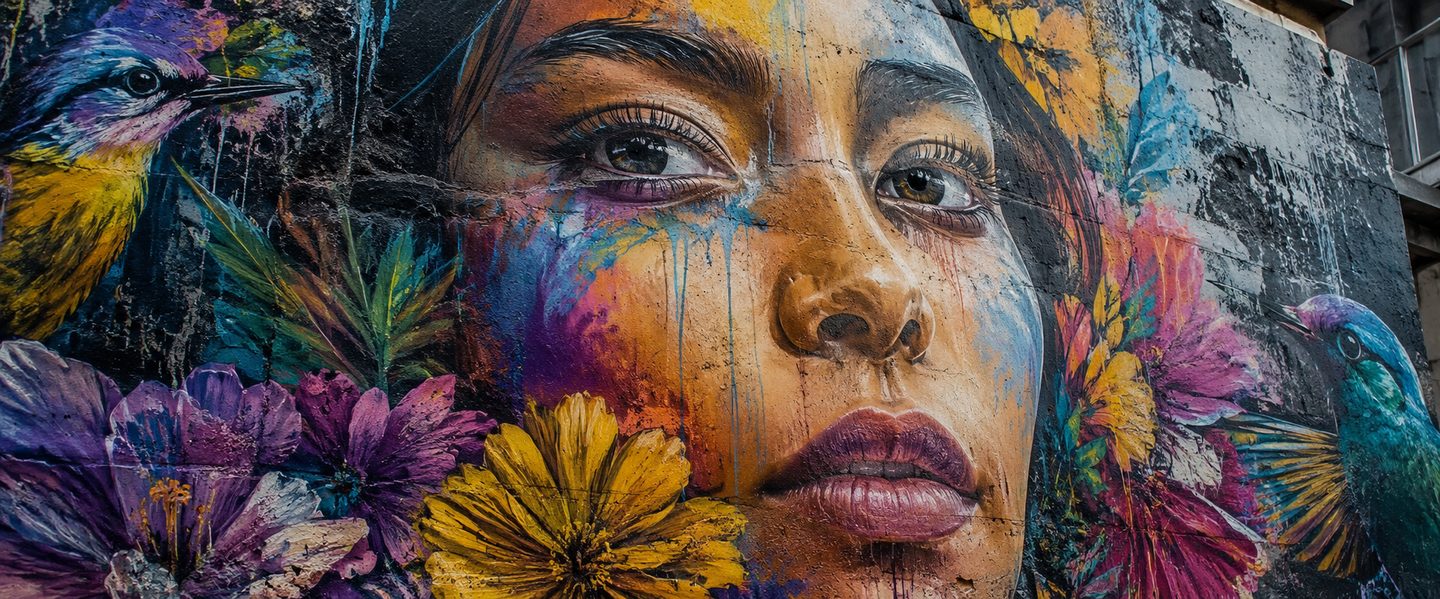
Understanding this history matters for anyone visiting Comuna 13. The colorful walls you see today were once bullet-scarred concrete. The murals aren't decoration — they're deliberate acts of memory and reclamation, placed on the exact surfaces where violence left its marks.
Hip-Hop as Resistance
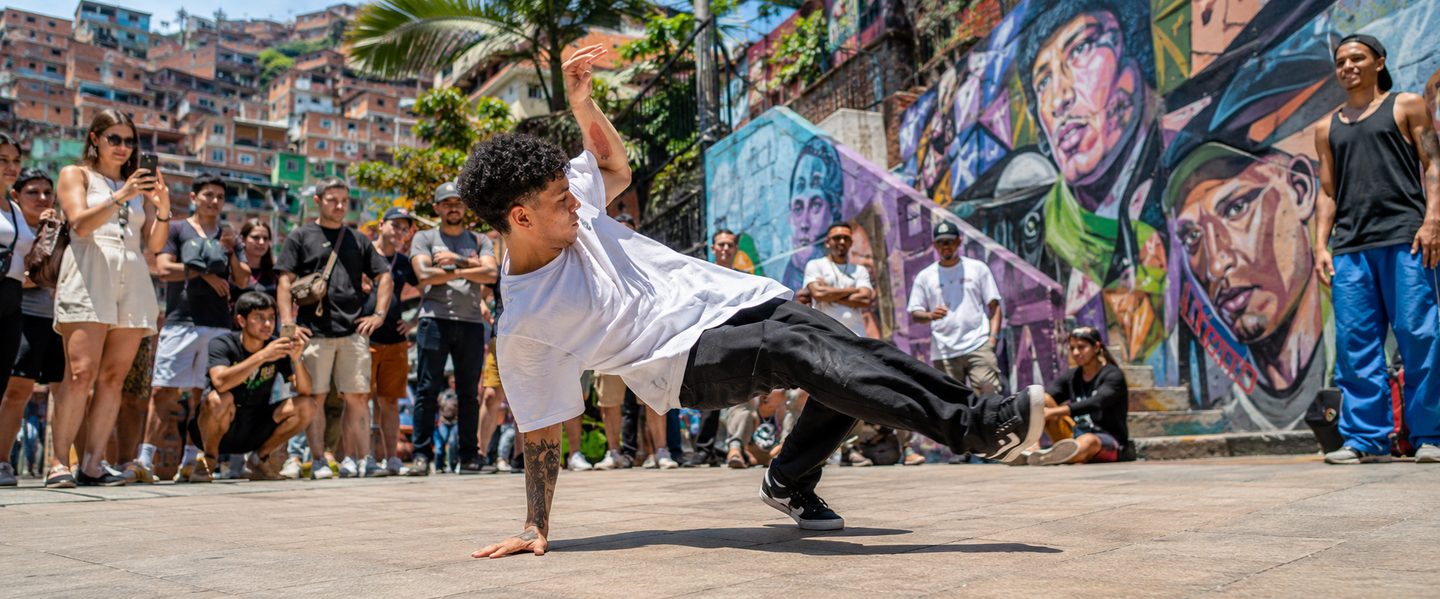
In the years after Operation Orion, a generation of young people in Comuna 13 turned to hip-hop culture — not as entertainment, but as survival. Breakdancing, rap, and graffiti became the mediums through which they processed trauma, claimed public space, and built an identity separate from the violence that had defined their neighborhood.
The collective Casa Kolacho, co-founded by hip-hop activist Jeihhco, became the organizational backbone of this movement. Starting as a small hip-hop crew, it grew into a full community organization that runs graffiti workshops, breakdance classes, guided tours, music programs, and youth development projects. For over 15 years, Casa Kolacho has operated on a simple premise: art and culture are infrastructure — as essential to a neighborhood's recovery as roads and escalators.
This wasn't a government program or an NGO initiative. It was organic, community-led, and built by the same people who lived through the violence. The rappers and breakdancers performing on the streets today aren't performers hired for tourists — they're the direct inheritors of a movement that literally saved lives by giving young people something to belong to besides armed groups.
The Escalators and the Turning Point
In 2011, the Medellín municipal government installed six outdoor electric escalators in the heart of Comuna 13 — cutting 35 minutes of steep hillside climbing into a 6-minute ride. The project cost roughly $6.7 million and was part of a broader urban integration strategy that had already connected isolated hillside communities to the city center via cable car systems.
The escalators were practical infrastructure — residents who had been physically cut off from the city now had accessible transit. But they also became powerfully symbolic. The government was investing real money in a neighborhood it had bombed a decade earlier. The escalators said: you belong to this city.
- 1990s
Armed conflict intensifies. FARC, ELN, and paramilitary groups contest control of the neighborhood.
- 2002
Operation Orion. Military operation clears guerrillas; mass displacement and disappearances follow.
- 2004–2008
Hip-hop movement emerges. Casa Kolacho founded. Youth programs use art and music as alternatives to armed groups.
- 2011
Electric escalators installed. International media covers the project; Comuna 13 enters the global conversation as a symbol of urban transformation.
- 2012–2016
Street art explosion. Local and international artists fill the escalator corridor with murals. The graffiti tour industry begins.
- 2017–present
Tourism surges. Half a million annual visitors. Local entrepreneurs open cafés, galleries, and shops along the mural route. Tensions between tourism and community life emerge.
Tourism: Gift and Tension
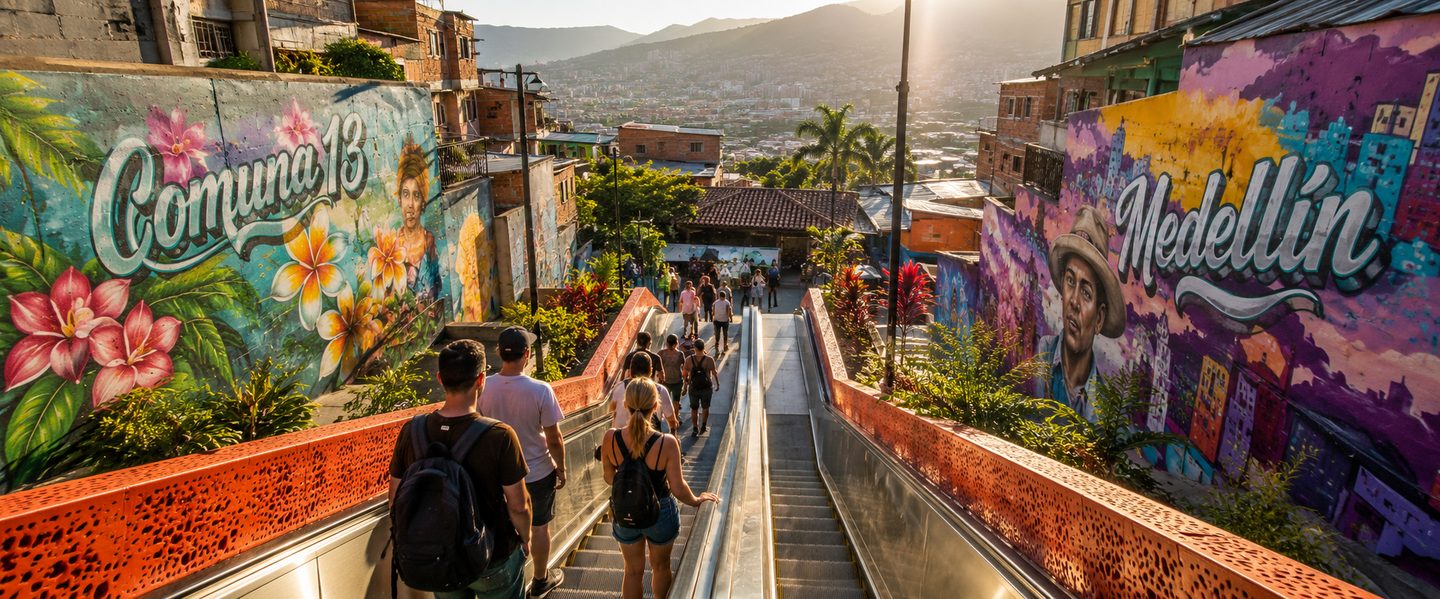
The transformation story is real, but it's not uncomplicated. Tourism has brought income, visibility, and economic opportunity to a neighborhood that had none. Local guides, artists, food vendors, and shop owners have built livelihoods directly from visitor traffic. For a community that was invisible to the rest of Medellín for decades, being seen matters.
But the volume creates friction. At peak times, the narrow streets and escalators can feel overwhelmed. Residents who aren't part of the tourism economy sometimes find their daily lives disrupted by tour groups moving through their neighborhood. There's an ongoing conversation — within the community, not just from outsiders — about how to balance the economic benefits of tourism with the quality of life for the 140,000 people who actually live in Comuna 13.
The best tours engage with this complexity honestly. They're led by local guides, often born and raised in the neighborhood, who share the real history — not a sanitized version — and direct spending toward community businesses. Choosing a tour run by locals isn't just better content — it's a way to ensure your visit contributes to the neighborhood rather than extracting from it.
Experience the Story in Person
The best way to understand Comuna 13 is with a local guide who lived the transformation. Tours from $15–50/person, free cancellation.
Book a Local Guide Tour →The Ongoing Story
Comuna 13 isn't a finished project. The murals keep changing. New artists contribute and old works are painted over. Community organizations continue to build programs for young people. The tension between tourism and daily life is a live negotiation, not a solved problem.
The neighborhood's story is still being written — by the artists who paint its walls, the guides who tell its history, the entrepreneurs who build businesses along its streets, and the residents who have lived through every chapter. Visiting Comuna 13 means entering that story mid-sentence, not at the end.